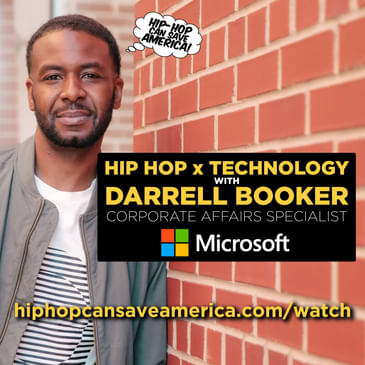
On this episode of "Hip Hop Can Save America," host Manny Faces sits down with Darrell Booker, Corporate Affairs Specialist, Racial Equity Tech Lead and head of the Nonprofit Tech Acceleration (NTA) for African American communities at Microsoft, to explore the transformative power of Hip Hop in education and the technology industry.
They delve into Microsoft's Responsible AI framework, which aims to address biases and promote diversity in AI projects, initiatives like Microsoft's TEALS program and workshops in collaboration with iconic organizations, such as the Harlem Globetrotters and The Hip Hop Museum, making a significant impact on diverse youth communities through STEAM education and coding using tools like Microsoft MakeCode and Minecraft Education Edition.
---
Hip-Hop Can Save America! with Manny Faces is a Manny Faces Media production, in association with The Center for Hip-Hop Advocacy.
Links and resources:
SHOW WEBSITE: https://www.hiphopcansaveamerica.com
ON YOUTUBE: https://www.hiphopcansaveamerica.com/watch
MANNY FACES: https://www.mannyfaces.com
NEWSLETTER (free!): https://mannyfaces.substack.com
SUPPORT QUALITY INDIE HIP HOP JOURNALISM: https://www.patreon.com/mannyfaces
Manny Faces Media (podcast production company): https://www.mannyfacesmedia.com
The Center for Hip-Hop Advocacy: https://www.hiphopadvocacy.org
SPONSORS / FRIENDS:
The Mixtape Museum: https://www.mixtapemuseum.org
Hip-Hop Hacks: https://www.hiphophacks.com
Hip-Hop Can Save America! is produced, written, edited, smacked, flipped, rubbed down, and distributed by Manny Faces.
Eternal thanks to Consulting Producer, Sommer McCoy.
[00:00:00] I am Brother Cornel West and this is Hip-Hop Can Save America
[00:00:07] Peace and love everybody, it's your man Manny Faces.
[00:00:12] Just wanted to let you know that Hip-Hop Can Save America is now available as a live stream show every Monday night 9 p.m. Eastern Time on YouTube.
[00:00:20] You can find it at hiphopcansaveamerica.com slash watch.
[00:00:24] Excerpts from that show will be played here on the audio feed so you'll still get the good interviews that you've been used to.
[00:00:30] But check out the live stream and check out my free Substack newsletter at mannyfaces.substack.com
[00:00:35] that's filled with all kinds of stories of hip hop innovation, inspiration, and generally hip hop news that isn't about dumb s***.
[00:00:42] For everything Hip-Hop Can Save America, hiphopcansaveamerica.com.
[00:00:46] For everything Manny Faces, mannyfaces.com.
[00:00:48] And if you find value in this work you can support it.
[00:00:51] We'd love to have you aboard as a supporter at patreon.com slash mannyfaces.
[00:00:55] Now let's go.
[00:00:58] The thing about hip hop today is it's smart.
[00:01:03] It's insightful.
[00:01:06] The way that they can communicate a complex message in a very short space is remarkable.
[00:01:13] And a lot of these kids, they're not going to be reading the New York Times.
[00:01:16] That's not how they're getting their information.
[00:01:27] So hip hop didn't invent anything, but hip hop reinvented everything.
[00:01:42] Daryl thank you for your time this morning.
[00:01:44] Well people might be watching this time at night, but right now it's morning so thank you for your time. I appreciate it.
[00:01:50] Thank you for having me man. I appreciate it.
[00:01:52] Indeed. Now I guess if you don't mind let's kind of start by, I could read your bio, I could tell people what I found out about you.
[00:02:00] But if you would maybe present yourself to our folk the way you like to be presented to the world.
[00:02:05] Okay. A couple ways. I call myself the techies favorite techie.
[00:02:10] Yeah, I kind of identify myself in any section of three forms.
[00:02:14] I'm a techie, I have a lot of experience. I've gotten into technology, social impact and all things culture.
[00:02:19] So long story short at an early age, you know, 14, got into tech, hard core coder, etc.
[00:02:27] Climbed all the appropriate ways in technology, you know, kind of finding some of the odds of being the only one that looked like me and young and all those things.
[00:02:37] I kind of developed this kind of state treatment myself and you know found kind of a different purpose for me.
[00:02:43] And that was how can I use all my technology to help others, you know, from a philanthropic standpoint.
[00:02:50] There's a lot of great people out here doing great work, whether it's nonprofits, you know universities, you know individual people and technology plays a role in everything nowadays.
[00:03:01] It really makes a difference. So how to bring technologies to support those things.
[00:03:06] And then last but not least, just, you know, being able to connect with my community, community I came up with still being able to resonate with young people and just kind of bringing all sides of me together.
[00:03:21] Just me the best that I can be.
[00:03:23] Got you got you. First of all, where did you grow up? Where are you from?
[00:03:27] I grew up on the East Coast Richmond, Virginia.
[00:03:30] It's not a small city. It's not a big city. We went through a lot of identity crisis in terms of are we are we North, you know what I mean?
[00:03:39] And I kind of grew up on all things New York rap and then, you know, as South boom is like okay, you know, we're part of the South as well so you know pretty cool middle of the road place to live in Virginia but now currently in LL.
[00:03:54] I did the thing that New York is doing. I moved to Atlanta as well.
[00:03:57] I'm right down the block from each other and also have to give you some props. I usually win the backdrop game, but you know you got a little something there and I appreciate that.
[00:04:06] Well, so my you know I'm upset I had time to put some more my hip hop and regalia up there so yeah you know why it's all right it's all right we we can do around to and we'll just we'll just we'll battle it out it'll be a whole thing.
[00:04:20] So of course at Microsoft, the reason why obviously you really came to my attention although obviously you're doing quite a bit more work that we will want to talk about get into the flow scholar project with the hip hop museum, formerly known the universal hip hop museum is for those who might not recognize they did change their name.
[00:04:37] They're good folks we know a lot of them we've talked to a lot of them and work with some of them as well, the flow scholar program kind of came through the work you do connecting with cultural community organization so can you give a little, you know, just give a little
[00:04:49] description what this flow scholar project is about what it does and then how it came to life.
[00:04:54] Yeah, so I kind of go the other way so people may not realize is that hip hop museum is a nonprofit most museums are all of them are.
[00:05:03] So the work that I found in me at Microsoft, dating back to the 2020 just days after killing George Floyd is part of our racial equity commitments of how we can use the power data and technology to address racial injustices or another way I like to put it.
[00:05:18] You know bringing all things tech innovation, skilling career awareness and workforce development, frankly to black and brown marginalized communities all over the country.
[00:05:28] And I created a program to where you know contrary to what people believe you know they see Microsoft, world's largest tech company you see headlines of however many billions Xbox paid to buy acquisition Blizzard and you know people just assume that we can touch
[00:05:46] every man in the world and maybe you're like that.
[00:05:50] And that's not feasible. But instead, what I do believe in will create it was a way that we can support every one of those entities that is working with every man if that makes sense.
[00:06:02] And that's those nonprofits those community based organizations those HGC use, and how in a one to many fashion we can work with them.
[00:06:11] And then through them. So with them is bringing all the latest and greatest technology to support their mission. You know if it's a nonprofit focus on your food insecurities in the neighborhood or homelessness, or, you know, whatever education, I can make sure
[00:06:26] they have the technology, they need for the highest impact on their mission.
[00:06:31] And when you look at, at least in the black community black lead nonprofits receive other strictly grants at a 76% smaller rate than their counterparts, which means they don't get the money to just invest in things like technology or people.
[00:06:45] So using that gap for them, giving them the free licenses to software to run their nonprofit at the highest level. We know they will have an impact on their mission.
[00:06:56] And then also getting for us man is, you know partners at a hyper local level from whatever Burrowing New York to the west side of Atlanta. We now have these partners that now through them.
[00:07:09] We can get all of our, you know workforce development and career awareness into every manny and every little manny there is.
[00:07:18] So for me, you know, when tap to do this, you know I understood two things one is, you know, I thought it would be stem, but I like more steam in that as for arts and culture.
[00:07:31] And, you know all things arts and culture are valuable career pathways. It's no way that we can tell a young person now that they can't be great by singing dancing, acting, whatever whatever but they open their phones and they see people do.
[00:07:46] And that must give them the tools to be great with it. You follow me.
[00:07:50] And then also too with me, I know that some are very representative what the hip hop culture is a part of me, it's part of my DNA. You for all I'm getting that you know, I'm feeling a certain type of way I'm, I'm cutting on a certain artist, you know what I mean.
[00:08:06] I'm a certain artist, but feeling down necessarily not so I want to be inspired that's certainly not. It is critical to us so we can't shy away from something that's so important within our black and brown community and we need to actually foster that so you know
[00:08:22] Microsoft made a commitment to support that hip hop museum, you know provided some funding to the actual physical museum, which is going to be open in next year which we're all excited for.
[00:08:33] So with Williams AI right now. This was an excellent opportunity for us to show people the power of what we call engineering of AI, and how we can help to create a tool the hip hop museum that's, you know, someone can think of it as a fun to, but we call it an educational
[00:08:52] tool where you can put in certain props which is teaching you the concept of our prop engineer, but you're putting in some props, you're answering certain questions of who you are what inspires you.
[00:09:05] What is your rap style or the beach you like etc. And then for debate with a spit out a few bars for you that can then, you know, for even actual artists, maybe get them out of that brief writing block moment, you know what I mean man.
[00:09:20] I think that's something that we see as something that can really support.
[00:09:25] Whether it's current artists that need a little push at the moment, I mean, everybody who goes right so why we don't want to be a ghostwriter for you, but then also thinking about, you know some of those young people and the last thing that I'll kind of say is it, you know,
[00:09:42] really makes things.
[00:09:44] Actable, you know there's probably been a lot of say a great singer, beautiful voice, you know I mean, but someone told him or her.
[00:09:55] Okay, but your content sucked, you know, your voice is great but what are you talking about. And when you think about what someone has to do is they need to, you know, pay a ghost ride or they need to find someone to baby say hey can write these lyrics for me.
[00:10:11] And then they can say right at home and kind of remove that barrier so that's how full scholars started. That's what it is and we get really proud of the possibilities for.
[00:10:22] Yeah, I think it's, there's a lot of confusion or apprehension around AI in general especially with the arts with songs being released and we don't know if it's actually a person or not, you know, but this is something that has aimed towards two things number one like
[00:10:38] creative spark, not creative replacement you know that's fine. Writers do that all the time.
[00:10:43] You know, give me I'm tackling a concept I just need a quick outline to get my thoughts and then I just rock out and I'm not really using the thing to write the thing. Yep, that's not what's happening here.
[00:10:53] Of course you say, then you slipped it in but I think it's actually an incredibly vital part. The prompt engineering part.
[00:11:00] It's funny, you may or may not know this. I actually do a keynote talk presentation called hip hop can hack everything. And I actually did present to Microsoft and one of your employee resource groups somewhere in some vast corner of your company.
[00:11:16] And one of the points that I always make when I'm doing any kind of talk or advocating for hip hop as a tool to help you know improve society is that hip hop always gives you life skills that are transferable to something else.
[00:11:28] Every every one who wanted to be a rapper, you know myself included maybe you we try to write rhymes we try to do our things we wanted to be an artist. And maybe we didn't make it to that commercial creative you know success level but we're better public speakers.
[00:11:42] Absolutely because we spend some time spitting in front of people. We're better you know processors of information because we took stuff in and that we know how to you know spit it back out in a different format.
[00:11:54] And that's what this is doing on the technological tip. It's giving somebody who may never have thought of prompt engineering which is a huge thing to know about these days.
[00:12:05] And you know young in communities where like we know the resources to technology aren't always available in a fun way that's going to be able to like do something cool with them and that will give them this spark of innovation that they may not have otherwise had access to.
[00:12:21] This is right.
[00:12:22] Right. Absolutely. I'll never forget. I think it was back in August when we unveiled the flow style to our office in New York who had hip hop legend ice tea come and introduce it to a group of 20 New York kids, and I got to kick off with a presentation.
[00:12:42] And I kicked it off in my first slide was what is Trump engineer. Right. And then my second slide was about four news articles for that I can't remember the other ones, and then the headline was the job that's paying $300,000 a year with no degree.
[00:12:59] And you should have seen me. Not even now just the keys the adults in the room I what pump engineer what is how do I do that. Oh, so you're 1000% correct.
[00:13:12] It's really, you know, teaching a lot of those, you know, foundation even intermediate skills in prop engineering and a culturally engaging way. That is one of the things that I'm really big on is when we think of the education system as a whole K through 12 colleges whatever.
[00:13:32] For whatever reason someone created, you know, this is the way you teach kids, and you have to teach all kids shouldn't learn this way. And that's not the case, you know, especially if you're not taking into consideration their environment and where they're coming from and things of that
[00:13:50] sort. So we have to move things in a different way so absolutely no other thing I want to just hit on what you talked about. Yeah, absolutely right. Now, we can tell people like this is just, you know, start, you know, now take these bars change them up, make it to what you all this is not the end all be all
[00:14:08] you would like a Microsoft as a whole. There's a reason we product for all things generally AI that's in the Microsoft suite or that's in being in a website, it's called copilot. Why? What is a copilot did you know your copilot is assisting you, you know, in all these things that all things
[00:14:28] that are AI are not meant to replace. They're meant to guide you and be able to assist you, but you still need to come and put your mouth on it every single time.
[00:14:39] Yeah, and we'll come back I want to talk to another aspect of what AI can do to help again, either communities or organizations that don't have resources because obviously there's things that can do to, to help crunch data or bring together, you know, different processes
[00:14:56] that you can automate so that you save yourself time I do it. I'm a very not many man show here and of course there's a lot of things that had to do you got a calendaring system that we talked to you know your folks about you know so all kind of things happening this thing was
[00:15:08] automated we sent the link you know it's one less thing we have to do. But, but before I kind of lose my train of thought I'd want to. You're in a very specific place where you're the big tech company.
[00:15:20] Your focus is equity and inclusivity and all that. And AI has been known in some other places, and some other situations to not be friendly. Let's just say to black and brown community specifically in terms of how facial recognition software is put together how some
[00:15:39] of these AI generative tools can't draw, you know, black folk, but you know, you know, like there's some been some problems. And that's in part because of I think, you know, society is greater issue with having diversity built into the core of everything
[00:15:55] that's not the case. So these things, these tools fail in that regard. How important it is internally, not just connecting with the outside world and Microsoft how important is, is it to the company and to your work in particular to make sure that stuff isn't prevalent in at least your work but you know in the tech sector as all.
[00:16:15] Absolutely, and you know, even though the majority of the world got on the AI train year year and a half ago. This is something that you know we within Microsoft has been working on a part of for years and we've been, you know forward thinking around some of those things
[00:16:32] So, we have within Microsoft something called responsible AI.
[00:16:37] And I used to be one of the responsible AI champs within philanthropies and essentially the way that works is if there are certain projects that we as Microsoft internally or one of our partners are wanting to leverage our technology to deploy.
[00:16:53] And there is even the smallest hint that there could be some biases, it has to go through a very rigorous review process.
[00:17:02] And there's plenty of examples where we have denied said project and said no, we won't do this, we will allow you to use our technology because we know those biases exist so that is a responsible AI framework that we've had in place for many years.
[00:17:18] But you're exactly right, which is why we are on the forefront of solving that in the way we solve for that is we got to get more people skilled and AI. So, so who's from the other end, creating these solutions, they start to look much more diverse, they're more inclusive
[00:17:40] So, you start to use putting these models to your point, not just a bunch of pictures of middle-aged white men, but this is someone who's now saying okay I need to have someone who has dreads in here, I need to have someone who has this and oh there's various religions and there's different things that people wear.
[00:18:02] So we need to include all of these things in our models to train them. So that is why it's super important for us to just teach as many people how to be in this field and that is one of the things that we as philanthropies are taking the charge with and leading, how we're making sure that not only our nonprofits are using AI but then also kind of like I said through them, through our schools and universities, we're providing as much training as possible.
[00:18:30] So as soon as we're creating the latest and greatest in gender and AI, we're trying to pass down those trainings to people in our community.
[00:18:37] Yeah, yeah, I've seen some of your work out in the field, just give a couple of maybe real world examples. You say you go to schools, you do a couple of things. What are some of the programs that you lead that are actually on the ground in the places doing the things?
[00:18:52] Yeah, I mean we do it somewhat regularly out of our office here in Atlanta since it's hip hop. We're really closely working with LERN records and we've done a couple of events with them. A lot of times we're focusing on our college-age females and we're bringing in men from Spelman and some of these other schools.
[00:19:12] And we've done some of these workshops where they leverage pop engineering, flow scholars to be able to create music. We also did the same thing with Dali, the technology to be able to generate images and then kind of show them the entire lifecycle as it relates to the possibilities in the future of music to where essentially you can pick a beat, AI can help you write those lyrics, and then AI can help you create your album artworks.
[00:19:42] And here's a package. But then also wrapping them around all the other industry professionals from marketing, etc. within that record label to be able to just show them that that's just one piece. Here's our technology, compile it and then here are some things moving forward.
[00:19:58] So I mean whether it's something like that or things that we're doing even at the youngest of ages through coding, through video game coding, a launch partnership with the Harlem Globe Trotters called Code Trotters.
[00:20:12] We're using something called Microsoft MakeCode which is a free web-based game development tool perfect for anyone. Not only kids but you can be 50 years old and learn video game coding for the first time.
[00:20:25] And with that we're teaching them their own coding techniques. We're teaching them video game techniques but then also sneaking in AI concepts. Like I said, even at the earliest age, elementary and middle school they're starting to understand some of these things.
[00:20:41] Yeah, that's up. Obviously when you have folks that don't... I've seen some of these programs where it's aimed at kids, it's hip hop or video game is great, conduit as well because they just don't think... I didn't think you didn't think...
[00:20:56] That computer programming is even a thing. Like if you don't get exposed to that concept, you don't know how the games are... you just play the game. You don't think that you could touch a computer in that way so early in life that that becomes your career path.
[00:21:11] Yeah, you hit the nail on the head. So many don't know but I think what's more disheartening is these things are out here. It's just like so much things if we just look within this country and this society, things aren't making it to everyone at the same time.
[00:21:28] Yeah, and I can give you a prime example. I think we all know Minecraft which is from my mistakenness, it's the number one stream. It's gang, it's gang, kids, all kids know it but people don't even realize it's Minecraft Education Edition where through that you can not only teach all types of concepts through Minecraft but you can actually teach them those elements and coding and building and then you can introduce other concepts.
[00:21:57] Like architecture, you know what I mean? We've done challenges whether it's at the high school level or colleges. Can you reimagine what your college looks like that's more inclusive and more sustainable? And then these kids are learning how to build in Minecraft but they're also learning architecture and sustainability concepts at the same time.
[00:22:20] Yeah, I mean and we find that what I champion here obviously the reason why we're talking, the idea that hip hop is the conduit maker. Yes you can get into video games, you can get into sports and through sneaker heads and all that stuff but hip hop has everything and it connects to everything.
[00:22:37] And there's nothing, in the talk that I do, tech based like the history of innovation, technological innovation through hip hop from the fact of just going back to touching the turntables in an unorthodox way all the way to how Soulja Boy pimped the peer to peer networks. There's so many innovative stories and anecdotes and histories that you could then show a young person through the music and culture they love to have it click in their head.
[00:23:03] I talk about that all the time. I feel like you and I are around the same age. I mean just how innovative from things called dat tapes to physical taking things to radio stations and all of this to the invention of internet and mp3s, how that works.
[00:23:19] But then streaming and how that's evolved. Whether it was a Kanye and I forgot which particular album it was and it was like he put it out but it wasn't finished. He goes and just updates the song on streaming.
[00:23:34] That was brilliant. Yeah, maybe Life of Pablo but yeah.
[00:23:40] Wasn't there a little rift between Beyonce and Khalees? I think Khalees was on her song. But Beyonce used some sample from Khalees. Khalees didn't like it so you know what Beyonce did, she took her off and pushed it right back to the streaming services.
[00:23:57] Or most recently, and I happened to be at Dreamville Fest standing there when J. Cole says you know he makes his apology and says, I forgot he said hey let's take that song off the streaming network.
[00:24:10] So it really has revolutionized distribution of music, collaboration of music. I mean technology is just vital to all things. Do artists even get together in the studio anymore to make records?
[00:24:27] Right.
[00:24:29] We don't even get together to do an interview and we're right around the corner.
[00:24:35] Maybe we should have. I should have thought about that but it's all good. But then we wouldn't have had the backdrop so we would need to load the cameras. This is okay, this is okay for now. No I appreciate that and that's the thing we champion here because hip hop can be that you know you talk about how most people think Minecraft and they see game and most people think hip hop and they see music and that's it.
[00:24:55] You know obviously we talk about connections with music in the education system, health and wellness. We have mental health professionals that are using that can you know connecting to kids through hip hop and using that to benefit lives as well.
[00:25:06] And on the technology front there's so much and that's why it's one of my favorite areas of intersection so I'm so glad that we're talking. I'll keep you for just a couple more minutes if you could.
[00:25:14] What can the general public do? What can parents do? Can you know teachers reach out to Microsoft and say hey we use Microsoft, we got smart boards and all that stuff. I got you know I can get a little curriculum allowance or I can go out and find some things. Are there ways that people, the general folk, can connect with the work you do to bring it to their kids if it's not being provided some other way?
[00:25:41] Absolutely. We focus on kids, there's a couple things that come to my mind. One is our TEALS program which is like the color TEALS and that is our computer science and high school program where we are going into high school and then an intense focus on you know high schools and you know some of the underestimated communities and bringing this program there.
[00:26:02] And we do it in twofold. If said school has a computer science teacher to some degree, we bring in a tech professional and as kind of a teacher's aide and assist that person will bring curriculum or if it's the other way around, they don't even have anybody at all.
[00:26:18] So we can come in and be able to bring that program. And I will say, we struggle with getting schools to sign up. And one of the reasons is sometimes it's really tough to get within the communities that need what we have to offer.
[00:26:33] So I say all that to say if anybody is hearing this in your parent, your teacher, your principal, some staff member at a school and you know you all can leverage a computer science program that we can bring to your school, please, and I will say that in length, please just Google or Bing, Microsoft TEALS.
[00:26:52] You can go to the webpage and then you can nominate your school. That's one thing. My work, my team is really like I said, rooted on the nonprofits and I just give me a moment to why that's so important.
[00:27:06] As I talked about with schools, the inequities at schools and then even sometimes a lot of great tape to do things at school. You know, you have the administration level principal, then you have a school board and all these other people that oversee.
[00:27:22] So when you think about bringing programming things into the school, it's not as turnkey as quick as possible. But you know who can pivot on the dime? Those community nonprofits that's around those same schools that get those same kids after school, that get those same kids during the summertime.
[00:27:42] And then for the most part, a lot of these schools have those relationships and asking those nonprofits to come into the school so we can effectively make change with our young people through those nonprofits. So if you're a nonprofit anywhere in this country,
[00:27:56] I can go because my remit has changed and twofold. You can leverage Microsoft technology resources for operational standpoint from managing volunteers to fundraising to a learning management platform, all these things that can allow you from an operational standpoint.
[00:28:14] And or your nonprofit that could take benefit of some of the curriculum that we have that, you know, we can set you up. We can train your staff to be the ones teaching these concepts to your youth.
[00:28:28] And remember all things Microsoft, AI, coding, cyber security, we're linked in. So when you think about career professional development, resume prep, we can support with that. And then Xbox gaming is bigger than the movie industry worldwide.
[00:28:43] So how can we get more diverse people into that industry? We can teach them coding. We have programs help people who want to be game publishers. Please reach out. Please go to a website called aka.ms.
[00:28:57] slash MTA. That's aka.ms slash N is a nonprofit, T is in tech, A is acceleration. Sign up on my
[00:29:06] free program within the day. You'll get an email with Nick Steps and get connected to my team.
[00:29:11] That's brilliant. And that connection to the nonprofits is key. You know, like I said,
[00:29:15] and we do have a lot of educators also that listen to the show. We talk to a lot of folks,
[00:29:19] again, our mandate as you use the word, you know, connecting hip hop to all these things.
[00:29:24] So we have a lot of teachers, but the nonprofit is so vital because, you know,
[00:29:28] there's some, you know, there's some places you can't get into the schools and do this kind
[00:29:31] of culturally responsive pedagogy or any of these things. They're not going to go for it,
[00:29:37] but the community centers and the community organizations are sort of the key
[00:29:41] to getting in front of the community. So it makes sense to me.
[00:29:44] Man, can I get one more shout out before we go?
[00:29:47] Today is May 1st, we're in this, which is the start of mental health awareness month.
[00:29:52] And I bring that up for two reasons. I personally think of hip hop understand,
[00:29:57] you know, how that can support people with mental health issues. I've said this publicly in
[00:30:02] a written interview I said here as someone who had followed depression and anxiety,
[00:30:08] one of my favorite artists to this day, rest in peace is Juice WRLD. You want to know why?
[00:30:13] Juice was not afraid to talk about what's going on his head, the demons,
[00:30:18] the things of that sort. And for me, that made me that moralized it for you.
[00:30:23] I'm getting that and I felt less isolated and alone. And, you know, hip hop does that to a
[00:30:31] huge degree for so many people and we need to understand that, you know, sometimes all you've
[00:30:36] got is, you know, your phone or your speaker, maybe y'all alone. And that's the one thing
[00:30:41] that's going to keep you from driving crazy at that moment. So I just wanted to say that I
[00:30:46] want to shout out one nonprofit called Silence to Shame. They're doing really big things,
[00:30:52] started by amazing woman Shanti Das, a huge legend in the hip hop industry. Please follow,
[00:30:59] support that organization and donate by texting the word silence to 707070.
[00:31:05] Silence to Shame is doing some amazing things to support mental health.
[00:31:08] EDDIE CONWAY Yes, fantastic. Shout out I know of Shanti Das. I've met her a couple
[00:31:12] times now that I'm here in the A, you know, all roads lead to certain folk down here. So,
[00:31:17] you know what I mean? And that's great. Future guests are here to talk about it, of course,
[00:31:22] I hope. And I appreciate that. You know, I joke all the time, joke, it's not a joke,
[00:31:27] but it's a joke. Of a certain age, hip hop OG, hip hop heads will say, we used to rap about
[00:31:33] selling drugs. Now everyone just rap about taking drugs. And, you know, like, I'm like,
[00:31:38] the first is like better. But okay, I hear you. The implication being that when young people talk
[00:31:44] about self medication or, you know, depression or these kind of, you know, that it's soft
[00:31:49] somehow. And that's the implications with you know, we're sometimes the older heads are just,
[00:31:52] you know, a little more hard rock. I understand that. But at the same time,
[00:31:55] that's something that we've always wanted, I think, from our music and our culture,
[00:32:00] is to be able to address every aspect of what's going on in their lives.
[00:32:05] And I know that, you know, you talk about Ju-Sua, we talk about this all the time,
[00:32:08] that these are ways to meet young people and even older people, you know, halfway
[00:32:15] in ways that just didn't exist before. They just didn't. You couldn't reach certain kids
[00:32:20] with traditional westernized, you know, methods of connecting mental health therapy.
[00:32:26] And now we have this wonderful tool. So instead of downplaying the content because
[00:32:31] you might not like what your kids are listening to, look for the keys and look for the ways in,
[00:32:36] the conduits. I always say, look, I'm not going to question my kid's taste in music if he's
[00:32:41] connecting to a song that's talking about self-medicating or feeling a certain type of way.
[00:32:46] I'm gonna take him to a therapist. I don't have to sit there and be like,
[00:32:49] your music sucks, bro. And then just keep it moving. That's giving me my conduit. That's
[00:32:54] giving me my spark and how to connect to my children better. And we can do that on a
[00:32:58] community level. Absolutely. That's the way to say it. Those are signs. Those are cues.
[00:33:04] Exactly what I was looking for. Yep. Yep. Exactly. 100%. Well, I'm glad we agree on that.
[00:33:08] I'm glad you brought that up and we'll continue to, like I said before, we have folks on this
[00:33:12] show that do that work exactly in hip hop. So thank you for bringing that up and putting
[00:33:18] that in folks' minds and they can keep, you know, keep tuned to us and we'll find some
[00:33:22] folks who are doing that work to share with them. Do the end of interview things if you
[00:33:26] could, sir. Let us know like what you got going on, what's coming up and the initiatives that
[00:33:30] you think folks should talk about or should know about rather. And again, just bring it back to
[00:33:34] the beginning. What do you expect to see in your collaboration with the hip hop museum
[00:33:38] going forward and the hip hop community at large? Yeah. Lots of things. Some things I
[00:33:43] can't mention at the moment. So I say stay tuned. Follow me on all social media,
[00:33:48] the D.A.R. E.L.L.B.O.K.E.R. Check out some of those things. Just continuing connecting with
[00:33:55] culture, working a lot with athletes across all sports, female sports, actors, et cetera,
[00:34:01] supporting their initiatives. So some of those things will drop. So and then as I said,
[00:34:06] I definitely can mention work really closely with another hip hop legend,
[00:34:11] Lou Chris and his foundation. They're doing some amazing things in Atlanta. We've done several
[00:34:18] A.I. workshops and boot camps with him and his team. So we're going to continue pouring
[00:34:23] into him and his initiatives. And then, yeah, we're going to marching up towards the
[00:34:30] opening of the hip hop museum. You should see some cool Microsoft tech in there as well
[00:34:35] when that opens. And I really need people to understand the significance. This is not a
[00:34:41] 5,000 square foot little museum. This is a massive museum in the Bronx. And the
[00:34:47] significance to hip hop is now our legends have to aspire to get to the rock and roll hall thing.
[00:34:56] This will now ship and people can now get inducted into the hip hop museum. So this
[00:35:02] is really big for all things hip hop. I'd probably say every respectable person is either
[00:35:08] on the whole or a member of this. So 2025 will be a big year for hip hop.
[00:35:13] Yes, indeed. As I always said throughout the year last year, hip hop 50 is cool,
[00:35:18] but I'm looking at hip hop 51 and what are we doing moving forward? And the hip hop museum
[00:35:23] is a great job of moving forward to make sure we're properly looking backward and connecting
[00:35:29] and doing all things for the culture. So we have a lot of friends that are on that
[00:35:33] committee and all that. And then last but not least,
[00:35:35] I just want to shout out Microsoft for collaborating with the hip hop museum. I think
[00:35:40] someone could easily say however many years ago, Microsoft and hip hop in the same sentence
[00:35:45] would never work. But here we are and it's now and it just really shows how amazing of
[00:35:50] a corporation we are. So listen, I was making music. I was a writer. I was a hip hop head.
[00:35:56] I was a DJ, a producer, and I used Microsoft windows my whole life. There you go.
[00:36:01] Y'all been in it. Y'all been in it. Not everything is the other folk.
[00:36:05] So I'll be the only DJ with a surface pro out there. They're like, well,
[00:36:08] looking at me like this. Yeah, no, absolutely not. Absolutely not. Listen, so listen,
[00:36:12] I really appreciate your time. I appreciate your work and your efforts connecting doing all the
[00:36:16] work that you do. Obviously, as you can tell, I'm an advocate for it. I'd love to come out,
[00:36:20] follow some of the events throughout here in Atlanta. You tell me when you got something
[00:36:24] else that you can announce. I'll spread it to the masses that follow what we're doing here.
[00:36:28] And I just appreciate you, man. No, I appreciate you and yeah,
[00:36:32] we'll get you over to our new office. We got a studio in Atlanta campus. The only Atlanta campus
[00:36:39] that has a studio of the great Zayto and helped us design it. So I got to get you in there
[00:36:44] and check that out. Yeah, for sure, man. We're here. And again, like I said,
[00:36:47] you have anything else community-wide local or national or international,
[00:36:51] you know, let us know and we'll spread that information. We got a newsletter. We have this
[00:36:54] show and we'll bring you back on the talk, man. It's cool kicking it with you.
[00:36:57] All right. You as well, man. I appreciate you.
[00:36:59] All right. Thank you, my friend. All right. Peace.
[00:37:02] Manny Faces. You sick for this one.
[00:37:09] Once again, thanks for listening to another episode of Hip Hop Can Save America,
[00:37:13] aka the world's most important hip hop podcast. My name is Manny Faces. You can find out more
[00:37:18] about the show at hiphopcansaveamerica.com. You can watch the show now as a live stream
[00:37:22] on YouTube. Hip hop can save America dot com slash watch. Check back for all the replays as well.
[00:37:28] The interviews from the live stream will be brought here onto the audio feed,
[00:37:30] so you always get the best of the live stream. You can also check out our Substack newsletter.
[00:37:35] It's free at Manny Faces dot substack dot com filled with stories of hip hop innovation,
[00:37:40] inspiration and in general hip hop news that isn't about dumb.
[00:37:46] Eternal shouts to our consulting producer, Summer McCoy. Be sure to check out her dope
[00:37:50] initiatives, hip hop hacks and the Mixtape Museum. We'll be back soon with another
[00:37:54] dope episode, but check us out on the live stream as well. Mondays 9 p.m. Eastern.
[00:37:58] Hip hop can save America dot com slash watch. Until next time,
[00:38:02] it's Manny Faces wishing peace and love to you and yours.

WATCH
HIP HOP CAN SAVE AMERICA!
LIVE ON YOUTUBE
MONDAYS, 9PM ET
WITH REPLAYS ON DEMAND