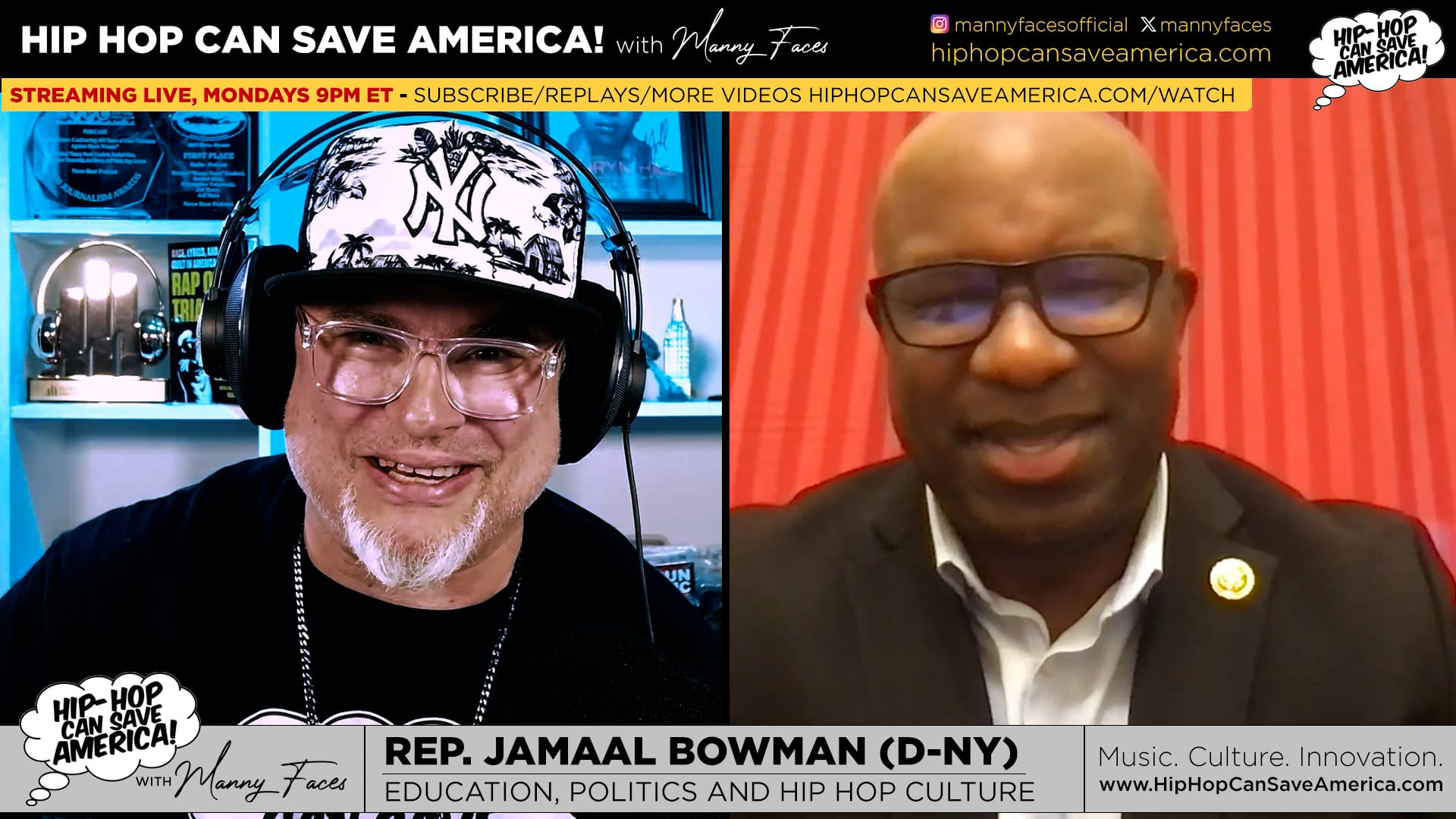
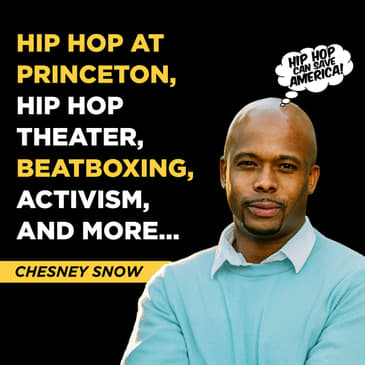
Renowned beatboxer, theater artist, and Princeton professor Chesney Snow joins Manny Faces for an inspiring episode of "Hip Hop Can Save America!" diving deep into topics like Hip Hop at Princeton University, the evolution of beatboxing, and the role of Hip Hop activism in community building.
Discover how Hip Hop culture’s influence now extends into Ivy League academia, community activism, and creative arts therapy, as they discuss the groundbreaking Women in Hip Hop course at Princeton and the impact of programs like Beat Rockers at the Lavelle School for the Blind in the Bronx.
This conversation highlights the importance of honoring Hip Hop’s roots while reimagining its place in diverse spaces from education to social justice.
Whether you’re a Hip Hop head, aspiring educator, or activist, this episode uncovers how the music and the culture can be a force for innovation, hope, and real-world change. Listen for practical insights on using Hip Hop arts in education, building community-based theater, and creating sustainable activism. Don’t miss out on exclusive reflections about legendary figures, grassroots organizing, and how each of us — through creativity, empathy, and action — can harness Hip Hop to impact our world.
---
If you’re looking for Hip Hop news with context, history, and care, you’re in the right place.
📬 Subscribe to the Hip Hop Can Save America! newsletter Curated Hip Hop journalism on culture, education, media, and social impact https://mannyfaces.substack.com
🎙️ Audio episodes & segments https://www.hiphopcansaveamerica.com
❤️ Support independent, culture-driven journalism https://www.patreon.com/mannyfaces
About the series:
Hip Hop Can Save America! explores Hip Hop as culture, history, journalism, and problem-solving — not just entertainment.
[00:00:00] I am Brother Cornel West, and this is Hip Hop Can Save America.
[00:00:32] I am a hand-curated collection of recent innovative and inspiring hip hop news and views. Not stuff about the entertainment and gossip, but about the culture. Specifically, ways that hip hop can help uplift humanity and improve society. Particularly lives, livelihoods, and communities that have been historically underrepresented, under-resourced, and underserved. Me? I'm the creator of all of these things, and your host and guide through these channels. You can follow me on social, find out more about booking me to speak or consult,
[00:01:00] or more about my award-winning podcast production company at mannyfaces.com. For everything Hip Hop Can Save America, though, this podcast, links to the YouTube channel, the newsletter, our Discord server. Contact us to find out how you can help support this urgently needed, quality hip hop cultural programming, and anything else you might need to know. Visit hiphopcansaveamerica.com. Once again, I'm Manny Faces, and I'm honored that you're here rocking with me on Hip Hop Can Save America. Let's go.
[00:01:29] Peace and love, y'all. It's your man Manny Faces. Thanks for your patience as I've been traveling so much the last couple of months that I haven't been delivering these podcast episodes as frequently as I'd like to. Between performing in New Orleans, giving keynotes and presentations at conferences like the Trinity International Hip Hop Festival. I'll be at Hip Hop Ed this weekend. So yeah, lots going on, and I just appreciate y'all bearing with me. But gearing up for the summer. So stay tuned and stay connected to the newsletter, y'all.
[00:01:58] Manny Faces.substack.com. There's a lot of good information being shared there in between podcast episodes. Now, of course, this episode was first viewed on YouTube. So as I mentioned in the intro there, swing over to the YouTube channel and catch these over there as well. But for us audiophiles, this is my talk with Chesney Snow. Chesney is a old colleague of mine. I've worked with him several times, going way back to the American Beatbox Championships in New York City a couple decades ago. Well, yeah, I mean, a while, a while back. And now he's at Princeton.
[00:02:28] The last episode that I think we had on this feed was talking to the co-creators of a new women in hip hop course at Princeton University. And it was co-created by Eternia and Dr. Francesca, who we had on the show earlier. And of course, Chesney Snow helped bring this whole idea to fruition. So we talked about it. But again, long history in hip hop art forms, including beatboxing, theater and activism. And so we had a wide ranging talk. Great conversation. Good dude. And I think a lot of insight was dropped from both of us.
[00:02:57] So please enjoy my conversation with Princeton University professor, hip hop practitioner and beatboxer extraordinaire, Chesney Snow. Let's go. Peace and love, y'all. See, man, Manny faces welcoming a an old time collaborator from back in the days to hip hop can save America. My man, my mellow Chesney Snow finally in the proverbial building. What up, my man? Yo, Manny, it's an honor to be here. It's an honor to be a part of what you built.
[00:03:25] I've been watching your work build, you know, over the years. It's really inspiring what you're doing. And I'm just, yeah, I'm so honored to be here. I'm glad we could like make it happen. Yeah. You know, and it's one of those things where it's like it must be special, you know, like time, time, time makes things special. Yeah. So we took that time. Divine time. Yeah, man. We came up.
[00:03:50] You were DJing, you know, the American Beatbox Championships, you know, when we had in Brooklyn, you know, you was, you was, because I, you know, I had heard of you from Birthplace Magazine. Right, right. Sure. And, and, and you were partnered, you were one of our media, our very early media sponsors, you know, so you were really, I think instrumental in, in us kind of helping to build and get the word out.
[00:04:15] Because I think at first, you know, that, that was really hard, you know, trying to get, you know, attention. And so you were, you were really a part of that. And I'm thankful for that, man. And, but then I didn't know that you, I mean, like, I knew you DJ, but you like really killed it, man. Like you was, you was, you, you were really doing it. So I was like, oh shit, you know, you know, I appreciate that, man. I still, I still spend, you know, when I can here and there. And thank you for that.
[00:04:43] It was really, so just start, let's start there. Obviously, you know, you did run the American beatbox championships for many, many years in New York City. We often talk about, you know, us within hip hop, about the neglect that some of the other elements, you know, receive. Yeah. Whether it's, you know, break in or, you know, visual arts, graffiti. Well, you know, we're officially not an element. True facts, you know, but artistic, you know. Yeah. Sub genres, sub, you know, whatever.
[00:05:13] And there's argument. People will argue that beatbox. I'll argue with it. I'll, I'll, I'll, I'll argue with it. I think a lot of the people that, that don't consider it an element may not have actually been watching the culture. Yeah. Yeah. Elevate and rise to the level of a fine artistry that it has become. How did, and, and, and your, your role was to. So yeah. So I, so. So I. So I document it, but to like, to, to highlight it, to, to celebrate it with that, with that, with that event series. How did all that happen? Yes.
[00:05:43] So, I mean, like, so it, it, it came up. That's an interesting story. So it, it, it basically, you know, as the culture was growing, you know, in the early two thousands. And I mean like internationally. Right. Um, you know, there, even before YouTube, you know, there was, there were, there were videos that you could kind of see. And it was, it was really kind of growing in Europe.
[00:06:14] And, uh, you know, and I, and I, you know, always have love for everybody, you know, but the, the thing that was kind of disturbing to me at that time was that the world beatbox championships, the logo of it was the continent of Europe. Right. And the, the, um, you know, it, it didn't stay that way, but that's, that's kind of where, you know, it began.
[00:06:40] And so for a lot of us in America or just, you know, a lot of us just on this side of the hemisphere. Right. You know, we're, we're seeing that as the culture was growing, it was, it was becoming less and less, uh, uh, uh, uh, uh, uh, uh, acknowledging it was, there was a, there was less of an acknowledgement of its, its roots.
[00:07:07] Even though there would be, you know, beatboxers who were basically becoming famous doing, you know, like basically entire routines of, you know, Razel, Kenny Muhammad, you know, kind of like the, this, this, this, um, uh, a generation of beatboxers who had really kind of popularized it to kind of like a higher level of art. Right.
[00:07:31] You know, and so, you know, as that culture kind of continued to grow, um, I felt that, you know, to me, I often say this, to me, hip hop's kind of like a spirit. Like, like, I feel connected to it in my spirit. Right.
[00:07:48] And I, so I felt that it was like, um, a responsibility, you know, in a sense to let the beatboxers here know about their lineage and their history and what beatboxing is really all about for, for us, you know? So beatboxing to me, first and foremost is about healing. You know, it's about becoming music, you know, it's about like you actually physically becoming music.
[00:08:18] You know? Yeah. And so the, you know, the idea of battling is, is like the fun, you know, reunion you're getting with your peers and stuff. Right. Um, so I, so I sought to, once I had kind of established myself a bit as a beatboxer, you know, I was also doing shows in Europe.
[00:08:40] I was, I was kind of moving, you know, at that time, you know, I was kind of among a group of beatboxers who were kind of like at the top of their game, I guess is what you'd say. Right. And, uh, and I was like, okay, so I have the, the means or at least the weight in the community to be able to, to convene and, and start an American championships because the, the world championships started in 2005. Right. Right.
[00:09:08] And so we didn't really start here in America, the championships till 2010. Right. And one thing that I would just note that I wanted to just mark Eternia, tell Eternia was that, um, what she doesn't know is that I also co-founded the Canadian beatbox championships. So that same year, you know, I partnered with Jim Wilde over at humanbeatbox.com and we set to, to really, um, put together that event here for the next generation of beatboxers. Yeah. Super dope.
[00:09:38] How many years did you, uh, were you at the helm of that? Oh man. So that was about seven, seven years, seven, and then, and then I, you know, I was at, at that time, I was kind of going through a divorce, you know, and, and my life was kind of, you know, it was, it was, I had things that I really needed to tend to. And I think another. I know how that goes, you know, you know what I'm saying?
[00:10:02] So, so I was like, yeah, I, I, I, I should take a step back and, and, uh, and, and, and there was, there was some real good, good things. There were some good things for me to take that step back. Um, not just personally, but just also artistically and professionally, because I kind of, the, the, the beatbox championships. At that moment had kind of become my life. It's, it, you know, it's like your work, you know how these things go. Like it's a, it's an international festival.
[00:10:30] So you're basically working on that the whole year. The whole year. Yeah. Yeah. And why don't do events? It's too much. I can't.
[00:10:53] Once YouTube kind of, you know, absorbed a lot of the ad revenues, you know, a company is like, well, you know, why are we going to give you 10,000 or 20,000 or whatever when we're paying, you know, YouTube already. And the videos you make, you know, our, our ads are just going to go on those videos anyway. So why do we have to pay you? You know? Right. Right. So for an event, a one day event. For the, for the event.
[00:11:17] And then the other thing, the reason why it kicked off over in Europe is because the government of Europe subsidized their, their art. Yeah. We've talked about that. I've talked about that so much. And it's such a, a different of difference of mindset. Like, you know, I talk about the Laplace, the culture center in Paris, right. That they built out there. And my man, JM, you know, who, you know, helmed that situation that was funded by Paris, funded by the city of Paris.
[00:11:45] Like, you know, they, and then I look at the, you know, the, the, the museum, you know, that's being built in New York, the hip hop museum. How many years and how much struggle to have to get, you know, funding and funding. It's such a struggle because in America, for some reason, we don't prioritize that kind of funding. I mean, I think, I think that it's, I think it's, I think it's that, but I also think that, you know, it, it's because we're so heavily propagandized.
[00:12:14] Right. And what I mean by that is that, you know, the, the, the arts, you know, Fanon, France Fanon, the great writer, you know, had talked about, you know, one of the, the, the key or these, these things that a colonial power or, or a government and autocracy will do.
[00:12:39] You know, when they're taking power and he's like, one of the first things that they do is they take arts out of the schools. They take arts out of that community because that is people that's celebrating the creative thinking. That's celebrating the thought, the human capacity, the human potential. Right. And that's not necessarily tied to the state. And so the reason that, you know, you can go, and it's not to say that those countries don't matter. Right.
[00:13:06] Like France and stuff, but like their, their military isn't holding up the, the Western, you know, economic order, you know? So, so that's one of the reasons why I think we, we find so much pushback, you know, even when we, when we were at the Lavelle School for the Blind in the Bronx, doing the beatboxing, you know, it's called Beat Rockers. Me and Taylor McFerrin, you know, kind of, you know, spearheaded that.
[00:13:31] And, and I did that for about five years before, okay, casting that down to the, to the next general beatboxers. So the, like that program, so phenomenal, but it was only made possible because we crowdsourced, we kickstarted, you know, we, we actually, you know, went to the people, you know, with this hip hop program. And, and, and eventually at first they laughed us out of the room. Right.
[00:14:00] And, and that's the way I'd usually, you know, like I would say that the, the speech language pathologist at first, when we first wanted to talk with it, it was sort of like laughing us out of the room. It was like, you know, we're really busy, you know, you guys, you know, thank you so much. And then, and then like a year later, you know, they're blowing up our email saying, wait a minute, there's something really happening here. Can we sit down and talk to you?
[00:14:24] Can you, can you just briefly for folks that, you know, don't, you know, that just briefly for anyone who might be, you know, what that program entailed, just, just real quick, what it, what it was, what it was about. So, so beatboxers was a program where, you know, me and Taylor McFerrin and Adamata had come in earlier days, but it was pretty much me and Taylor McFerrin would go to a school at the Lavelle school for the blind. Now this is a school in the Bronx.
[00:14:51] It's very specialized school, meaning that, you know, students, you know, have visual impairments, but they might, but that's usually coupled with another condition. Or so for example, some may be only able to communicate by pressing a button, you know, with people. So it's, it's, it's, it's, and it's from, I believe, you know, like kindergarten up to like 21 years old.
[00:15:17] And it's a public school and on Gun Hill Road in the Bronx. And so what we would do is one to two days a week, I think it was around like one day a week, but we would go there and we'd get all the students there and we would basically, Taylor would be on the Ableton recording these sounds that, that I would go in and make with the students.
[00:15:44] And we would just do kind of, just take any sound that they could make and then start to figure out how I would, how, how we would create music for them. And, and, and Taylor would loop those sounds. We would all be beatboxing together. We put tracks to it and we have this, this jam session, right? Those jam sessions started to become more and more structured, right? Because it was about communicating with each other. It's about sharing with each other.
[00:16:10] It's about being able to have these exercises, repetitive exercises that they can do for their speech, which is essential to speech language pathology, right? So it would be something that the kids could do, you know, and they, and they enjoyed doing it. Right. Right. They, again, this is about becoming music.
[00:16:33] And so one of the things that we, we found just over the years is that there was so much joy and community, you know, every year we made a mixtape, you know, with all of their, with all of their songs. And then we, we'd give those out to the families and people who would come to, to the event. And it was just a phenomenal experience, but it, everything costs a little bit of money. Right. Yeah. Yeah.
[00:17:01] And, and funding for these programs is, you know, it's not easy to come by. What, we're going to try to change some of that. Yeah. And that's, you know, the next, the next part of the work, right? Yeah. Just real quick to, from a speech pathologist standpoint, when they laughed you out at the building in the beginning, but obviously afterwards they recognized what was happening here. Yeah.
[00:17:23] What was some of their reactions from a, from, from a, I guess, from a professional standpoint, what did they see this program do that other methodologies didn't? Well, I mean, well, one, what it did was it, you know, we could get into very specific sounds. Right. And we could develop exercises that became a part of their, their daily routine. That's actually one of the, one of the big challenges, right? Right.
[00:17:49] It's like, can you get, you know, you're trying to get somebody to make a specific sound. This is just the sound part, right? Understood. This isn't like the other forms of, you know, you can, you know, work with the speech language pathologist to kind of create, you know, teaching them some of these beatboxing techniques and sounds.
[00:18:09] Figuring out like how you're, you're, you're putting the sounds that, that they need inside this, this kind of musical framework so that they can actually just enjoy doing this all day. And the more, the repetitiveness, the more that you do it, the, you know, the better that you become. And then you're, you're able to kind of make these, these progressions.
[00:18:31] You know, one thing that I'll say is, you know, I've been, I've been doing this hip hop and education for a while now, not necessarily through the traditional academic tracks of, of, of how we, you know, think about it. You know, all due respect to, to everyone, what they do, you know, but, you know, one of the things I feel about our work is that, you know, we, you know, the, the arts and the sciences are equal.
[00:18:59] They're not, they're, they're, they're, they're, they're not supposed to be put in this framework where, you know, one is, is, is more powerful than the other. And one of the things that they were competing, they have to, you know, work together. And one of the ways that I think they do really work well from the discipline standpoint is like, is how they can heal us.
[00:19:28] And I don't mean just like some kind of emotional healing, which is necessary. I mean like actual healing. And one of the examples I bring up is Gabby Gifford, you know, for those of the people who don't know, Gabby Gifford was a representative. Her husband is Mark Kelly, the Senator, you know, she was a victim of gun violence and she was shot in the head. Right. Right. She survived that. Right.
[00:19:57] Then she was able to use music therapy essentially to rewire her brain. So this, it was because she had played the French horn, right. And because music activates more of the brain than almost any other part, right. More areas of the brain than other activities. Right. Right. She was able to learn how to speak again, learn how to walk again. Right. She was, that was done through a form of music therapy.
[00:20:28] You have dance therapy. You have theater. You have, you know, I think you have hip hop theater therapy, which is what I work on. That's right. And to that point, you're speaking very professorially now. Oh, shit. Which is, of course, now. No, no, which is fine. I'll be trying. Yeah, yeah, yeah. No, you're dropping some knowledge, you know, you're dropping some science. And I just wanted to then point out, you know, your current role.
[00:20:53] Obviously, if you've watched the other interview I did with your cohort members, your course creators, Eternia and Dr. Francesca about the new course there at Princeton University. Tell me about your role at Princeton University for the last few years now. How you got there, what you've been doing. And then we'll talk about the course. So, wow, that's great. Great. Again, thank you for letting me be able to be in this platform to talk about it. You know, I didn't think I'd be talking about this stuff.
[00:21:21] You know, because I've just been kind of out there doing it, you know. That's the thing. That's, you know, I recognize that everyone out there doing the work and they don't got time to like, I don't want to say market yourself, you know, but actually spread the word. I think we have time for it. I just, I don't know that people like, I don't know that people really take the time to give us the platforms, you know, that we need to spread the information. But, you know, this is my fourth. I'm going on a year four here, you know.
[00:21:51] And, you know, I'm in the theater program. So I focus on community engaged theater, specifically working through choreo poems and other forms of theater that kind of in the lineage of hip hop theater. Right. Or music theater.
[00:22:09] And I use that to develop courses, to develop events, and specifically to bring communities together to practice theater and have dialogue and discussions. Right.
[00:22:26] So I will take students to, say, Memphis, where we create community choreo poems with people who might be nurses or young people dealing with gun violence or law enforcement or, you know, social workers. And we put them together through an intensive process. And that process is about creating theater.
[00:22:49] And then we bring members of the community together to celebrate experience and to start to have discussions and dialogues, you know, about, you know, how, you know, how, how can we confront some of the issues that we have in our community that tear away our humanity for each other. Right. I think that's, that's one of the functionalities of art. Right.
[00:23:15] Is that you're, we're, we're here to not just entertain people. Right. But we're here to be able to like connect, like have our shared humanity connected to each other. You know, it's like when you, you could go to, you know, you know, any city, you know, and you, you play like an old hip hop track, for example, you like, you throw on like some Nas or something like that.
[00:23:43] Like, you know, like, you know, like New York State of Mind, like you, like here and you, like, that's like an anthem, but that song resonates. Right. You know, no matter what hood you're in. Right. You know? And so, and so that, that is again, our shared humanity. So where those, those, those, those tribal, it's the same thing with like Outkast, you know, like you don't have to be from ATL. Right. You know what I'm saying? Right. To, to think, you know, that album is classic.
[00:24:09] And so I, that's one of the things that I do in terms of Princeton. The other thing is I, I started this, this course because, you know, we were doing those 50th events and I was like really excited. And I wanted to. Just to remind folks, cause it'll be in the thing, but the, the women of hip hop course that you, that you co-created, this is what we're talking about now. So this is, it just started its first, uh, first year. Yeah.
[00:24:37] And, and so the, the, you know, I was doing these, um, I was, I was getting ready to do those 50th events. You know, that was a whole year long thing. Right. Everyone was talking about like, what are we going to do? And I, you know, I was kind of just coming to, to get settled into Princeton and I was like, oh man, you know, like, I really want to do something for, uh, the 50th. You know, like, I was like, maybe this is a good opportunity for me to reconnect with my home girl Eternia.
[00:25:05] You know, like we were kind of like a, a beatbox MC duo back in the 2000s in New York. And so like, you know, um, I remember going to the executive director here at the Lewis center, which is where the course is, is housed. And we were like, I was like, I really want to do something. And I want to, I want to build something here around hip hop to, to kind of honor and celebrate, uh, women in hip hop, you know?
[00:25:34] Uh, and she said, um, uh, great. Marion's great. She said, uh, you know, let's put some thought into it and not just kind of throw something up together because we don't want it to be performative. You know, if we're going to do something, let's really do something, you know?
[00:25:53] And I, and I deeply respected that, you know, it gave me some perspective because as I was doing a lot of the hip hop, uh, you know, events and so forth that, you know, I just, I started to think, you know, like really what is the, you know, like, what is the story around women in hip hop? You know, um, and, and, uh, yeah, that kind of led me to having deep conversations and inviting Eternia.
[00:26:21] Eternia introduced me to Dr. Francesca. Um, but I didn't want this to be, you know, a course that was just about like, oh, let's look at the history and the socioeconomic and, you know, we're going to pull out the texts that exist and talk in this real academic, uh, uh, I don't want to call it jargon, but, you know, it's like academic talk. You know, and, and so I, I said, you know, with it, it has to be a performance course.
[00:26:48] It has to be something where you do the hip hop, even if you've never done it before, because I grew up, you know, hip hop wasn't like a music you listen to. Right. It was, it was something everybody did. Right. Everybody, you know, it was like on the playgrounds. It's like everybody was rapping. Everybody was trying to dance. Everybody, it was, it was a way of life. Right. As opposed to, um, like a, like a singular artistic thing that you might pursue in a. Right. Right. Yeah. Right.
[00:27:18] I mean, I couldn't draw for shit. You know what I mean? Right. I was trying. I was trying. That's right. A hundred percent. You know? And so, and so like, I, I wanted this course. I was going to say, I could, I couldn't break, but I could do the wop. So I was like. But you could do the. Yeah, man. You know, like we did what we could do. We got it when we finished. Yeah. So, so, I mean, like I, I, I felt like, I mean, and it might come off like, okay, so yeah, he's a performer. He thinks like this. Right.
[00:27:44] But like, I, I, I really, you know, one of the ways when I talk about beatboxing for people is I, you know, especially like young kids. Cause now I just, I do like a lot of workshops for, you know, kids, you know, maybe like families who might, you know, have documentation issues or something like that. Right. So I try to like do that kind of stuff now, like as opposed to like touring and stuff. Cause I, I don't, you know, I have a job now so I can actually go and do, you know what I mean?
[00:28:13] I can go and do some of the other things I really love to do. Yeah. And so what I always tell them is I'm like, yo, you know, if you could say the alphabet, then you can beatbox. Right. Right. And that's how we come into it. Right. Like if you could say the alphabet, you could beatbox and that gets everyone at least trying. Right.
[00:28:34] So many of the, I think for so many years, you know, kids get told so many things they can't do. Right. Right. That it starts to kind of build up in them. Right. I mean, a lot of the stuff, you know, we were able to do cause we, we didn't know we couldn't do it. Right. Right. We just did it. We just did it. Just did it. You know? Well, and that, and that's what made us really innovative. You know, we made the, we know we, I was a part of the team that made the beat thing.
[00:29:03] I don't know if any of you guys know the beat thing, but the beat thing was this, it was like a portable MPC. Right. And, and it was, it was, you know, it was a beat thing. Like it was basically, it was, you know, it was a music technology, you know? Right. And so we, you know, I was part of the sound team, you know, doing. Designing the sound. All these vocal, designing the sounds. Yeah. We got the thing in the guitar center. We got the thing in the Best Buy. Like we, we, we.
[00:29:32] So an accessible drum machine. It's an accessible drum machine. And, and, and it, it was a pretty amazing piece of equipment actually. It was ahead of its time, you know? And it, it was, it was, it was, we were out, we were working out of Nashville. The team, the core team was out of Nashville. And, you know, to me, it showed like these brothers who were, well, we were all some brothers
[00:30:00] who like, who had an idea and a dream from, from hip hop, who came from hip hop, you know, and said, you know what we want to do? We want to design a beat machine. Right. And, and, and that's crazy to people. Only Roland, only the designers somewhere in Germany or something. Right. Design the beat machines. You know? Yeah. Yeah. And, and. Dr. Rhythms and all that. Yeah. Yeah. From, from our, now we do it from our perspective, from our mindset. It's not going to be the same as a drummer.
[00:30:28] You know, you might have a team of drummers who are like, let's be, you know, they're like, we don't even drum. This is our drum. So how would we make it? Yeah. You know? It's remixing every idea. It's what we do. Yeah, man. And yeah. And what we got now is we've got technology, you know, we've got, in terms of like what hip hop has, you know, like as it leads. Right. Yeah. Yeah. We've got, you know, we've got technology.
[00:30:58] We're, we're soaring in academia. Right. Like at some point they laugh you out of the room. Right. And then, and then they're like, wait a minute, you know, we'd be stupid to, to, to laugh them out of the room because we could see. Right. The, the genius in it. And so then you become accepted. Right. And then, and, and then you lead. Now, I think keeping your integrity. Right. Right. You know. And fighting against co-option and all the other things that can come from that. Yeah. Yeah.
[00:31:28] Yeah. That, that continues to be the fight. Yeah. Yeah. And that's the only thing I kind of, I have some regrets about in terms of like beatboxing. Right. Hmm. Is that, you know, um, in, in kind of stepping away from the scene for a minute. And then, you know, we lost like another leader in the scene here. His name's Kid Lucky, uh, really kind of, you know, was instrumental in the beatboxing movement. A hundred percent. Um, you know, friend, yeah. Yeah. Yeah.
[00:31:57] Um, and you know, is that the culture right now has become a bit toxic, you know, because of, um, leadership that isn't really from here, that really isn't connected to. Right. Um, an ethos of hip hop. Right. And so for a lot of women, it's become very toxic for a lot of people of color, it's become
[00:32:27] toxic. Right. You know, like when, when people say, well, why don't you see that many, like, like black beatboxers or beatboxers of color? Like, you know, because they, you know, most of us are like, we don't have wealth. Right. So those beatboxers who might be growing up in Chicago and seeing the stuff happening online, they, they can't afford a plane ticket to Switzerland. Right. Right. You know, like they can barely afford a Greyhound to New York. Right. Right. And where are they going to stay? Right.
[00:32:57] So, so, so the, so the, so the, the, the culture, you know, has become exclude, you know, exclusionary. Right. Right. Right. Of, of, of, of our, of, of people. Right. Yeah. Yeah. And, and, uh, And this might mirror also what happens in the breaking, you know, community, for example, as well. You know, I mean, you know, people look at the break, you know, the Olympics and say, you know, uh, it's, it's, it's so worldwide. It's not, it's not ours anymore. It's like, well, there are regional competitions around the United States, but you got to get,
[00:33:26] be able to get to them and you got to be able to, you know, all the things that we have, uh, I've talked about freestyle sessions. They do, you know, they do some great stuff, obviously the Red Bull stuff, you know, but same thing. Like you have to be able to, to go and take off work and, you know, do, you know, and get to these places. And sometimes it's the people with that have a little bit more means are the ones that are able to, you know, follow those roads. Yeah, man. No, I, I, you're, you're absolutely right. And I, and I think, you know, and it just kind of goes back to like what, why I feel like you're so inspiring, man.
[00:33:55] Like, like, because the people actually have to go out and do the work. Right. Like, like the, the, the, we, we have to stop the celebrity worship stuff, you know, because, you know, like, and I'm not saying that like, um, not trying to call out any particular celebrities and stuff, you know, but like, I do, you know, like the, the, the, they have to, they have to, well, for example, I'll give you an example.
[00:34:19] People were like, you know, people saw the flyer for the, for, for, for Ms. Miseducation. Right. And they're like, oh, looks like Cardi B's on there. Why is Cardi B on there? Oh, I see this comments. I'm like, okay. So first of all, think of whatever you want to think about the celebrity. Right. But I know that celebrity goes into the hood, right. To places like the Fortune Society in New York, where women are coming home from prison that have nothing. Right.
[00:34:49] And she's, and there's no cameras there. Right. This, this isn't something she's putting up on social media. Right. And she spends the whole day with them. Right. She donates money to actually provide for those people who are the most vulnerable. Right. So whatever we say about what we think about Cardi B's this or Cardi B's that. Right. Right. What I see, right. Because I worked in that space because I'm there. Right. Right.
[00:35:18] Is that she showed up. Right. I didn't see anybody else show up. Right. Right. But she showed up there. Yeah. In the homeless shelters. Yeah, I get it. With no camera. So, you know, whether or not I like her music or think of her this or that. Right. And those things are also worthy of discussion. Like these are social. Yeah. Absolutely. Absolutely. Absolutely.
[00:35:44] What better space to say it in a place with, you know, young minds are growing and having these conversations about which can come in, you know, into these courses, into these spaces as well. It's fine to talk about all that stuff. But it's also like, don't throw the, you know, the real hip hop activism out with the mumble rap bathwater. Oh, you know what I mean? Now, bruh, I don't get it, bruh. So it's like, yeah. We can't just all. Yeah. Yeah. No, I was like, you know what?
[00:36:11] I feel so, so blessed, you know, when people, when we, you know, when you said something at the beginning about, you know, we're the old heads now, we're the old school heads, we're the middle age, whatever. Sure. You know? Yeah. And like, man, I'm so thankful for that. You know? Like, like, like. We get the opportunity to do these things. And listen, I also want to, I want to point this out before I forget. You've always been an activism minded guy. Like you've, I remember setting up a town hall. You did town halls.
[00:36:41] Yeah. Maya Azuzena was there. I was there. Like you, you've done things with a community minded, uh, you know, upliftment of the community, anti racism, like all the things throughout the years. And you were able to incorporate that with your performing. Right. But now I'm just thinking about what you just said about this. Cause why I like this course so much is that you're, you're, what you're, even the other coursework you did, making choreo poems, working with people in the communities, that is activism. And it's, and it's coming from a hip hop DNA.
[00:37:10] It's like, this is how a hip hop head is going to do activism. It doesn't just like the, this is how a hip hop head go make a beat machine, a drum machine. Right. You're saying it doesn't have to be a protest song. I don't have to go out and do a protest beat box performance. Like, yeah. And, but you're in a position now where you're saying, well, I'm in academia. I'm at this, an Ivy freaking league college for God's sakes. I have some resources. I have a partner. Like you said, you mentioned who runs the center. We can make some of these things happen.
[00:37:36] I'm never going to, I'm speaking as you, you're never going to come in without that activism, you know, upliftment of my people and my communities, you know, several communities that you're a member of and those that you advocate and are in allyship for. It's going to, it's going to come with you no matter what you do. That's the thing about our generation of hip hop is, is that we take it with us wherever we go.
[00:38:01] And when we're given the chance to really use it in these spaces, then brilliance happens. Yeah. No, I, I totally agree with that. You know, one of the things that I, I really feel in my heart is the core of our survival
[00:38:23] as a, as a people and a nation is that, you know, I think people are kind of looking for these savior kind of figures a lot of the time, whether that's a celebrity or a politician, et cetera. Right. And what's been at the core of, I think of this country, um, is the, is the, the labor movement is what really kind of put forward a lot of the basic things of these so-called
[00:38:51] rights that we, um, think of. Sure. And when you look at that history, what you, what you begin to really see is that, you know, your, your, your, your, your freedom, your, the change in your community, it's not going to come from some sort of electoral politics. It comes from the work that you do every day. It comes from the, the, the, what you spend your energy on doing every day. Right.
[00:39:20] Is the only thing that's going to change your life, your community's life. Right. Right. And so I, I think right now, you know, because of this, like, like what's happening in the, in the world, you know? Yeah. Um, you know, our country is really, I feel like our communities are really going to have to kind of put that, that credo through the spine again, you know? Yeah. Like it wasn't, you know, Linda, Linda Baines Johnson wasn't somebody who was like, you know what I should do?
[00:39:49] I should sign the civil rights act and, you know, you know, and I, I should, I should. Definitely wasn't saying that. No, no, not at all. You know, you, you know, uh, but, but it was, it was those people. And it might only have been a few people. It wasn't everybody. Right. Who, who spent every day of, of, of their waking hours committed to not going to vote.
[00:40:19] Right. Cause they didn't have that. Right. Right. But going to change that system. Right. And it took all of their efforts, you know? And one of the things that I remember the, uh, the great, uh, Harry Belafonte told us, you know, cause I was blessed to be able to like meet him and he was producing this project that I was working on, Breon Bain. Right.
[00:40:44] Um, the, is like, he said, they, they, they won every battle of a civil rights movement. Every battle they went into, they won. Right. Right. And he said, they lost the war. And he said, and he said, the reason they lost the war was because after they had, you know, gotten all of those things accomplished. Right. They took a breath. Right. Like, right. We made a step forward.
[00:41:15] And he said, in that single breath, the, the, their enemies had reconvened, restructured, reorganized, you know, built their, their, their resources again. Right. So that they, they would then figure out how they would overturn it. And they have a long game strategy. You know? Yeah, they do. You know, and, and, you know, so there, there's something that like, you know, it just reminded
[00:41:43] me of, of, you know, when marriage equality was passed. Right. And I remember when it happened that week. Right. Because there was, there was a big celebration of that. Like finally they had spent all of these years, this movement to be able to get to this, this point. I mean, I'm, you know, you know, how can you not want to celebrate with them? Right. Right. With, with, with people who've been struggling in that lineage, you know? Sure.
[00:42:09] But if, if you really recall that week that the Supreme Court did that, right, that was also the same week that they gutted the key provisions of the Voting Rights Act, which then later on would put us in the situation that we are in today. It goes back to that, what Mr. B was talking about. Mr. B, Harry Belafonte, you know, instrumental in hip hop, right? He was the first producer of a, he was the main producer of Beat Street. Right. That's right.
[00:42:39] But I know that, you know, as I was going around doing this work, you know, I was trying to work on taking the choreo poem, right. And figuring out ways in which I could integrate that with technology with like immersive VR AI to kind of develop systems from that. And, you know, I was, you know, I was talking with one of my colleagues here, I'm blessed
[00:43:06] to call a colleague, you know, Ruhab Benjamin, you know, and she like opened up my, my, my mind as she does everybody's mind, you know? Um, but, you know, she was basically like, you know, in, during slavery, you know, um, that system had existed for so long, right. That if you're living in that system and you've got generations that have lived and died in
[00:43:32] that system, no matter what you think, it's hard for you to imagine another system. If you're like living in that, right, right. Your great, great grandfather was a slave and died and your great, great grandson is going to be a slave and, and, and die, right. And so you're, you're in that water, that ecosystem.
[00:43:55] And when you're in that ecosystem, the, the, the most important thing for us to be able to do is not lose our imagination. Right. Right. It's, it's to make certain that we understand that this does not have to be this way. Right. That it's, it's, it's actually antithetical to life, you know, uh, to, to kind of power your system by, by death. Right.
[00:44:25] And this is one of the things that I, even when you think about like hip hop and I'm, when I was going to talk about something, you know, I love, like, I love hip hop. Right. I do. It's, it's, it's, it's, it's a part of who I am inside and out. Um, you know, I remember like listening to music and, uh, and I remember like, like, I would, you know how we like memorize the lyrics. Mm. And I remember like one day I was like a, I was like a teenager or something that I was
[00:44:55] listening to. Like, I don't know. It was like bone or something like that. And, um, and so I'm like saying the lyrics and I'm like, wait a minute. Like, if I really start thinking about this, like, it sounds like I'm repeating, like, like, like I'm listening to music that's saying they want to kill me. Hmm. Do you understand what I'm saying? Like, because it's direct, like, like, I'm going to do this to you. I'm going to, I'm going to, I'm going to kill you. Right. The proverbial you. The proverbial you. Right.
[00:45:24] But now it's like, but, but, but, but I'm listening, but I'm listening to it. Yeah. And I'm thinking about like, like, like, like what is that? And not to harp on bone. I love bone. I still rock some bone. Right. Right. Of course. But it's, but I started to kind of think about like the darkness of some of the, the, the, the music. Right. Right. And, and, and when you kind of, kind of push forward that, that kind of death, you're,
[00:45:52] you're powering that with, with death, then death comes. Right. Like, like, like I have to, I have to think about like, sometimes I think about like, you know, I remember we all remember 1996 pop dies. If you don't remember that, like at our age, you probably weren't living in hip hop. You know what I mean? Like, I know, like I was a teenager. I broke down in tears. I know exactly where I was when I heard it's one of those. Yeah. Yeah. It's one of those moments. Right.
[00:46:21] It's like nine 11 really. Yeah. You know? And, um, you know, for years, you know, he was so impactful that, you know, there was all sorts of, he ain't dead and he's dead. You know what I mean? Like, but in the, you know, whatever quarter of a century later, you know, as we've become adults, you know, I have to wonder, like, I think Buster was talking about this. It's like, if you say that, if you speak those words constantly about, you know, death,
[00:46:50] death, death, no, I wonder if he hadn't spoke that with the universe have provided an alternative. Right. You know? And I think that we have to think about that in terms of like how we show up in our communities. We can't be in despair because despair is the fuel of despotism. Right. You know, it's the, it's the, and so the, the, the, the right now we are at this critical
[00:47:19] juncture for sure, but it's not new. If somebody is coming to you, to us say, oh, you know, we have dictatorship, autocracy. Right. Right. Well, we'll tell it to somebody living in Jim Crow. Right. Right. Tell that to somebody who, who, who was working in the mines in Virginia. Yeah. Right. That we just now got, you know, authoritarian. Right. You know, I think that the, the, you know, now what we have to do is like really look
[00:47:47] at what those systems of resistance were. And the hip hop was a part of that. Right. Yep. So, yeah. Yeah. So, yeah. This is a good, see, we, we, we, we, we could go back and forth. I get it. I love what you're doing. I appreciate that appreciation. Yeah. I appreciate that perspective. And I think that that's probably where the, I don't know, the solution, like, you know, I wrote, I, hip hop could save America. I wrote a book and it says inspiration for the nation from a culture of innovation, not solutions.
[00:48:14] I can't, I'd be so presumptuous to say I have the solutions, but I know that the inspiration is here from the culture, from the people that have been, you know, involved in it, because it's, it's not just following in those same systems. It's kind of what you're talking about here. We saw the labor movement. We saw the civil rights movement. We saw, and, and where they succeeded and where they failed, where they took a breath. I think that's brilliant. And saying, well, how would, what would hip hop do? You know, what should, you know, how can we take our positions and take those things
[00:48:44] and, and, and remix it, smack it, flip it, rub it down, but basically invent the thing that hasn't been invented yet, which is the, the, the real movement or the real movement of movements or the collective of collectives to try and solve a lot of these problems. And I think that the answer comes from these conversations. I think the answer comes from folks like you, um, you know, humbly, you know, folks like me, but more like the folks, the hundred something people I've talked to on the show, which all have the same kind of ethos that you and me do.
[00:49:13] And we're just trying to find the best ways now to, as, as the middle-aged, you know, hip hop heads to apply it in the places where we can make the most impact, uh, push back against it being co-opted, push back against the forces of the industries that are just making money off of this stuff. But we're out here, man. We're doing this work. You're doing this work. Yeah, we are, man. And, you know, I, maybe the last thing I want to say about this is like, you know, um, one
[00:49:43] of the things I really loved about what Immortal Technique and Hasan Salam and, and that, that kind of group, uh, uh, uh, people that we kind of came up with in that New York hip hop, uh, era. Yeah. Was that like, you know, and I just saw them specifically, you know, or Eternia is kind of doing this, uh, on Instagram now, but like they actually took the, the resources that
[00:50:09] they were getting from their music and they went out into the world and they, they actually affected and did something for people. Yep. 100%. Who were at the most vulnerable space. Yeah. And I remember this is when I started to have some, some, you know, some issues with Jay-Z because I used to listen to Jay-Z, all right? I used to listen to Jay-Z a lot. I mean, I still listen to Jay, right? But I, but at the time when I was doing that project that Mr. Harry, Harry Belafonte was on, Mr. Belafonte gave him a little bit of critique, right?
[00:50:40] Right. Basically saying that, that him and, and, and Beyonce could do more. I remember this, this was, this made news. Right. Yeah. This was, this was news. Right. And, you know, and he was, he was speaking that, let's just provide some context, right? Like, like he was speaking that from the con, from, from this place of like those artists who were at the, the, the, the top of their game, the top of their financial prowess of
[00:51:10] that day. You're Nina Simone's, you're Harry Belafonte's, you're, you know, these big stars. They, they funded the movement. Yeah. Right. They, they literally took like Mr. Mr. B, right. Mr. Belafonte. Right. He, he provided, he basically educated all of King's family. He made sure that King's family was okay because that was his promise to Dr. King because
[00:51:38] they knew what Dr. King was facing. Right. Right. And so when, when, when, so kind of fast forward to that time, come back to that time where Jay-Z, you know, is, is taking in that criticism. And then he, he, yeah, that lyric is where he called, he was like, boy, you know, he put out this thing where he's like, call, call Mr. Mr. Mr. B a boy. It, it, it didn't sit right with me. You know what I mean?
[00:52:07] Um, and so it started to make me think like, you know, and again, I, I, I loved, you know, Jay's work, you know, in terms of his, you know, he's, you know, dope, dope, dope MC, you know, and, uh, very successful. Right. But those, those people who we idolize as celebrities, right. Right. Like those people should actually be helping to fund the movement.
[00:52:36] The stuff that happens in, in Minneapolis, for example, right. They're like, who pays for all those whistles. Right. Right. That they used. Who pays for it. Right. Who provides the bottled water. Who's actually like, you know, you, you gotta be able to feed people in a revolution. You can't have a revolution if everybody's out here starving. Right. That's why they want us starving. That's why they want us starving.
[00:53:02] And so, and so, and so the, the, the, I think if we're, if we're really serious about like changing the system, like we, we have to look at some of these basic, basic things. Yeah. Right. That, that we need in order to be able to do that. So if you look at Fannie Lou Hamer, for example, Fannie Lou Hamer, you know, icon of the civil rights movement. Right. You know, a singer. Right. So she's an artist. Right. So she's, you know, she's an artist who's at the forefront of, of the, of the movements of her day. Right.
[00:53:32] But she was a farmer. Right. She developed co-ops so that the people in her community could eat. Right. Because if they can't eat, they can't march. Amen. Okay. So yeah, that's what we got to do, bro. I, I, you know, I, I do a lot of talks myself nowadays, as you know, and, uh, I'm, I'm often speaking about the intersection of hip hop and social justice. And it's, it's funny, not funny, but it's telling that you mentioned, of course, immortal technique, Hassan Salam.
[00:54:02] And I talk often about majesty. You remember majesty who used to run with them, the late great majesty. And he's to me, the epitome of this with a Hassan. So I tell the story all the time in my lectures about this stuff. Uh, there was a album release party, Hassan Salam album release at Webster hall. Um, and at the time, uh, majesty who was working with organizations like justice league, New York and, uh, cop watch, and who went to Palestine and who went to Cuba before it was
[00:54:27] like, you know, in the news, quote unquote, cause it was been having problems doing workshops with youth doing, you know, uh, fighting against human right violations in those places through his artistry, but also locking arms with protesters, you know, to protest against the killing of Eric Garner. Uh, majesty was coordinating with Ferguson, uh, uh, demonstrators when Michael Brown was killed by police to coordinate, you know, make sure we have protests out in St. Louis, but also in New York.
[00:54:54] And one of the greatest things that I thought he did, which I, again, I, I amplify this all the time. And it's to your point is that at the album release party, Hassan Salam's album, you had, you know, you have merch tables, you have like t-shirts and you're selling CD cause they were selling CDs back in time. CDs, younger people, if you remember are actually little, uh, uh, circle anyway, um, you know, but, um, and then he had, he had one of the merch tables in the album release party was cop watch. He brought them into the album release party. He brought them into the club. Now cop watch for those who don't know, you, you remember cop watch was an organization
[00:55:24] that would teach, uh, folks to, you know, the, your rights when it comes to filming, uh, uh, engagements with law enforcement. Right. So whenever someone get stopped and frisked or pulled over or, you know, being arrested and you could film them. And this was before, like, it's kind of common knowledge now, but the pack then, you know, the police would tell you, you don't have the right, you can't do this, move back to take your phone. And they were like, no, you have the rights. And we're teaching the community members how to do this. This was cop watch. Now we wouldn't know that George Floyd was murdered. We wouldn't know that Alex Freddie and Renee good were murdered.
[00:55:53] If not for people filming them, I'm not drawing a direct line saying it's that kind of work that majesty was doing and to bring it into the, the club, the album release party so that they're there and talking to the, the people from the communities where the over policing is taking place and where all this is happening to me, that's more impactful than a celebrity making a protest song. And, you know, we don't need celebrities like we did in the sixties to call attention
[00:56:21] to something that isn't getting, you know, like we needed, uh, Bob Dylan to write about hurricane, the box. You know what I mean? We don't need that. We have social media telling us everything we need to know. All of the issues are out in the open, but we don't have is people doing that kind of work getting amplified because they're the ones that are actually making impact on the ground level. And I tell that story and rest in peace to majesty. I mentioned them every time. Rest in peace, man. It brings tears to my eyes sometimes, you know, just, just kind of thinking about this
[00:56:47] brother, you know, because it's like he's, you know, he was, um, this is like you, you, you, he was such an authentic energy for us to be around, you know? Um, and like, even now, you know, the fact that, you know, most people around the world
[00:57:09] in like terms of hip hop, no idea who his brother is, but, but his impact was like, um, so massive, you know? Yeah. A hundred percent. This, this, this retail, like telling this and talking, like you're talking about him is in the introduction to my book. It was that important. He is fundamental. And he is, uh, that model. I mean, like you said, the energy, the legendary ciphers still going on 10 years later, every,
[00:57:38] every, every, uh, Friday night, uh, 8 PM to midnight, uh, union square subway station from May to November. I always shout out my brothers at legendary ciphers are still out there carrying on that legacy. That's how impactful and they'll do it because, and they'll tell you, they'd be like, we're doing this because we're, we're keeping majesty's, you know, legacy alive. And it's like, there's, and there's only one majesty, but you know, there's other majesties, right? There's other people doing this work and that's why we got to amplify them and put them in places and bring them to the colleges and have them speak. And yeah.
[00:58:04] You know, and that's, and that's definitely like, you know, one of the things that I tried to do over my career, you know, um, was like, if I'm, if I'm going into some place, if I, if I'm able to crack someplace open. Yeah. Um, like the, the very first thing I'm doing is, is bringing, uh, bringing the people with me. That's right. Bringing, you know, so like even, you know, I created this film called American Beatboxer. It's documentary.
[00:58:34] It did, it did fairly well, you know, um, and, uh, you know, it got us to go to Harvard. And so we, we had my first residency at Harvard. They were like, you, you know, you want to come to Harvard and screen your film and, and, and do some beatboxing. And I was like, yeah, yeah, I want to do it if I can bring all these other beatboxers with me. Right. If I can bring 10 other beatboxers with me, you know, and, and, and I, cause I want
[00:58:59] to bring those, uh, those young people with, with me because they amplify. Right. And it amplifies them. Yeah. Right. And, and, and, you know, sometimes I feel like, you know, in the industry, in the industry, there's like this sort of kind of scarcity thing, right. Where it's like, I, I got in there. So, you know, I'm good, homie. You know what I'm saying? Right. Like, why you want to cosign? You know what I'm saying?
[00:59:29] The, the, the reality is that, um, you know, that's just a colonial mindset that, that, that, that actually, you know, ends up taking the wealth that you have because, because you're, you know, the more that you build up other people, right. The more successful you will become. You know, I remember my, um, like I was, I was teaching at this high school in Brooklyn
[00:59:57] and friend of mine, uh, Kristen Anderson Lopez and Bobby Lopez, Robert Lopez, you know, had just won their first Oscar for this, let it go. Right. Which was a song on Disney's frozen. Right. And, um, I was so excited, man. Cause, you know, like, cause they were, they were friends and like, I, you know, all the, the whole team, we was all watching the Oscars, you know, cause I had never had anybody like, you know, that I knew that was even not ever nominated for an Oscar. Right. Right. So I was like, I'm just going to watch.
[01:00:26] And then, um, Jamie Foxx was presenting their, their award. Right. And so he, he, uh, he, he comes, he gets on the microphone and before he does anything, he just starts beatboxing. I'm like, what? Why is Jamie Foxx beatboxing? I was like, they're going to win. They're going to win. Right. I was like, I knew it. They were going to win. And then they won. Right. Yeah. And so they won. And, you know, of course, you know, we're all going crazy as friends and, cause we love
[01:00:54] immediately, you know, or blowing up their phones, you know, and, uh, and I asked them if they would come to, um, to speak to my students. Right. In Brooklyn, who would never have an opportunity like this in that school. Right. Right. And, uh, you know, or it, it just, it never existed before. Right. And so I was like, okay. And she said, yes. Right. She said, well, we'll definitely come. Now this was in the chaos of them. They had no idea what was going to happen to their lives.
[01:01:24] Right. Like after they won this Oscar. Right. And the day of them coming to visit came and they were like, um, they came in looking like they hadn't slept. Of course they hadn't slept because they were in a delivery room for their family because like they're, they were having a birth that night. And so they, they had been in the hospital the whole time, but they didn't cancel. They didn't say, Hey, you know, we can't, we can't do that. Right.
[01:01:53] And they could have easily have done that. Sure. And understandable. And it would have been understandable. I get it. Yep. But they came. Um, and so we, um, I took them, I took them in my students and we, we went to bricks, which is like a community, uh, center in downtown Brooklyn. Um, and we set up a, like a, a way for them to kind of sit back and they had all these questions,
[01:02:22] you know, uh, geared up. Um, and, uh, one of the students asked, you know, essentially, um, you know, what, what's the, what's the secret to your success? Like what, what, what, when did you know you were going to be successful? Right. And, uh, I remember I love Bobby, Bobby, if you're watching this, I love you, bro.
[01:02:43] He said, um, he said it happened when I realized that, um, my work wasn't about showing everyone how great I am, that my, that, that my, my, I became successful when I figured out like how my work serves other people and to make other people great. Right. Right.
[01:03:08] This is an EGOT winner, you know, EGOT winner, Robert Lopez, you know, the youngest EGOT winner at that time. You know what I mean? Come on now. And, and, and, and just, and just hearing that, uh, really kind of stuck with me and amplified, you know, like what is my, what is my purpose? You know, is my purpose to try to, you know, be the, the, the, the best actor or the best beatboxer or the best director. Right. Right.
[01:03:34] Or is my purpose really about using all of my energy and efforts, right. To amplify all those people around me to kind of show them the potential of their greatness. Right. Because then that I feel is really greatness. Right. You know, we've got a lot of work to do. Yeah. Thing is right now when I feel like we've, at least me, I can only, I'm only going to speak
[01:04:00] for me, but like growing up, I kind of felt like I had this, um, the history had, had kind of happened already. Right. That there was a civil rights movement and there was slavery and there was these world wars and all of that sort of stuff. Right. Right. That, that had happened. And, and now I, when I'm reading history and I'm seeing the struggles that they did to
[01:04:27] give us some of these kind of basic things that, that, that we have kind of come to take for granted. Right. Right. Uh, we're not going to miss that struggle. We're going to have to come forward now. Right. Like, and, and join the people that are actually, that are actually doing it and show up in those spaces with hip hop in a way that is, I think, able to listen, you know? Yeah.
[01:04:56] Um, I, I think, I think we need to be able to bring our skills into that space and help amplify like you do, you know, these, these movements, because you're going to be against algorithms. You're going to be against interests, you know? And so the, the power of the, of the word and the message is, is, is probably one of the most critical, uh, things to get to people, you know?
[01:05:22] Um, and you know, I'm, I'm interested to see what we do, you know, in the next couple of, couple of years, because we are going to be facing it. You know, like I, I learned with my mom last thing, top of 2020, everything shuts. Right. Right. Like I had these shows lined up. Right. I was going to do my third Carnegie hall headlining thing. I was like, yo, things was moving. I had some good stuff lined up, man. Oh boy. Oh man. You know? Yep.
[01:05:52] And, and, and, uh, so it shut down. Yeah. And, uh, I, I was, uh, I was going through a breakup, um, at the time and, uh, with, with my, with my daughter's mother, she later became my daughter's mother's interesting. And, uh, and, um, and I had to leave, you know, I wanted to get out of New York.
[01:06:19] And so my mom had built, had, had, had purchased this little farm outside of Minneapolis on the Wisconsin, uh, side of the border. And, you know, this was a pretty amazing because, um, for those people who probably don't know my story, you know, we, you know, my mom kind of came up, you know, from, we were kind of working our way up from things like, you know, women's shelters and, and, and really kind of working our way up from the, from the bottom.
[01:06:46] So it was like really inspiring to see her, like go back to school and, and become a respiratory therapist and, and buy a little farm. Right. And where she was raising chickens and goats and stuff like that. And, um, when the pandemic happened, I understood like what it meant to be revolutionary because in that moment where everything shut down, my mother had her own water supply, her own water,
[01:07:15] her own water filtration, like system. She had basically her own power. She had her own food supply because she raised her food. She knew what chemicals went into her food, into, into those animals. Right. She, she had toilet paper stocked up in it, like canned vegetables. Like it was, it was almost like her own little bunker. Like a survivalist. Like, like, like a survivalist. And she had the, and she had the, the guns to go with it. Yeah.
[01:07:44] In case anybody, you know, wanted to take from her. Of course. Right. And, and that to me, that was really revolutionary because at the end of the day, you know, you can, you know, you could, if we're going to be activists, this is what I loved about like the Black Panthers and Fred Hampton. And these were like, what's the number one thing you do? Oh, people got to eat. I mean, you know?
[01:08:07] And so when, when I went to my mother's place, I, I like, you know, I realized like, oh my God, like I, like the pandemic's happening out there. But right here, I'm just sitting in nature. I'm not worried about anything. And it didn't mean that I wasn't affecting me because I was seeing it affecting family. I was seeing it affecting me. And then I could see the smoke rise because we're, we're right outside of Minneapolis. Right. Right.
[01:08:37] Then, then, then it went, it, it, you know, then that's when it became real. Right. Because I, because I could go and I could see that revolution happening. That perspective. And again, everything you've been talking about in the last, you know, few moments. Hour. Yeah. Yeah. Well, yeah. But specifically that idea of amplifying others, you know, that the lessons are out here for all of us.
[01:09:05] If we, if we just hear them like, you know, just, just knowing about your mom now, now that's a piece of the puzzle for me, you know? Mm-hmm. And everything we've gone through in our lives. And especially when you're intentional and purposeful about doing that, listening and amplifying. You know, my dad was a college professor. All he did was amplifying. The same thing. It's, it's knowledge. It's knowledge. And that's the cipher, the knowledge cipher, right? Just, just sharing information. Yeah. Yeah. And, you know, like I said, that's, that's why I do, you know, I wrote my first book is just filled with other people.
[01:09:34] I just, I just put all these interviews in a book. I just gave you a little bit of my, my thought process, but you know. Man, I can't, I can't wait to read the book, man. Like I gotta get a copy of this book. I'll get it to you. Yeah, for sure. For sure. Yeah. You know? Yeah. So it's, it's great that you talked about like our parents. My mom's inspired me so much. And, and, you know, one of the things that I felt was like the, well, the pandemic forced her to go into retirement because she had a type of cancer. And so she was vulnerable during the pandemic. So she could no longer work in the emergency room. Right.
[01:10:04] And so, and so she was kind of forced into an early retirement. Yeah. But one of the things like now that's so just like inspires me, man, is that, you know, it's struggle for her now. Because her medical expenses are so astronomical. Yeah. You know, and this is a woman who is an, is an army veteran, right?
[01:10:33] Who served her country for four or five years. Right. This is a woman who spent 20 years working in an emergency room as a respiratory therapist, literally saving people's lives, holding their breath in her hands. Literally. Like literally she'd have to use her hands to keep people breathing, you know? And so to think that we live in a society that now says, you know what, but, but your healthcare doesn't matter. Yeah.
[01:11:00] You know, like I, I, I, you know, I think like, I get so tired of people saying like, you know, civilization, right? Because there's nothing civilized about this. There's nothing civilized about this, this, this, this situation that we live in. And just because like literally right now I am in an ivory tower, like my office is at the top. I'm looking right. This is a, this is literally a tower. Right.
[01:11:27] But I, I would say that like, I'm, I have no illusions about how I got here, you know, and where I came from. Um, and so, you know, I would love to join with people if the people want to, you know, connect with me, you know, I'm really like, I think we really have to, uh, get up to, you know, become a part of these movements. Cause the movements are going to need us no matter what you do, whether you're a computer
[01:11:52] software programmer or you're a dancer, an artist, or you're, or you're working in building services as a janitor. The move, the, the, the, the movement needs, needs us to like, uh, put our, our, our minds and our bodies against this machinery. Yeah. Yeah. Amen to that. And listen, I always say very few things bring people together across all the demographics,
[01:12:16] across all the borders, across all the divisions, like a good, you know, hip hop cypher. So yeah, man, this was a great cypher with you brother. Oh, a hundred percent, man. Long overdue. It was just great. Just like just kicking it. And I hope everyone got, I know people got some, uh, some gems and some inspiration out of it. Tell the folks who do want to reach out to you. And I've got some things in mind we're going to talk about later, um, as well that I'm working on, you know, in the background, but, uh, for in the meantime, tell people who do want to reach out or learn more about the course or learn more about your performing
[01:12:46] and whatever, how do I reach out? All the end of interview things. How do people find you? Absolutely. So, uh, you can find me at, at Chesney Snow, you know, uh, uh, I'm, I'm on social media, not on social media, you know, but I'd usually answer messages from social media. Um, but I'm just, I, I try to, you know, put a little bit of distance, uh, between me, but if you really want to hit me up, uh, you can hit me up, or, you know, via Princeton's
[01:13:12] website, you know, my email is ChesneySnow at Princeton.edu. You know, if you really seriously want to get at me, um, and, uh, yeah, ChesneySnow.com, you know, uh, if you want to learn more, I'm always down to collaborate and rock with people. If you want me to come do a, I have, I have a great workshop that I do with kids. I love working with kids. It's called kindness is my superpower. You know, um, I think it's really important for us to kind of think about like, what is power now, you know? Yeah. Um, yeah.
[01:13:43] Yeah. Yeah. Well, even listen, you've always, you've always been, uh, uh, a superhero to me. Like I said, I, I, I watched you all those years doing the beatbox championships and I'm like, you know, this is someone who puts others first. Um, and now hearing about your mom, I know where you get it from. Thanks brother. Yeah, man. This is great. Good kicking it with you, man. And listen, I come back and forth up top, you know, a few times a year. So I got, yeah, man, let's, let's do it. You down at ATL, man. I love ATL. Y'all got the food game a lot.
[01:14:10] Listen, I'm telling you, you know, for a New Yorker that's very arrogant about his, you know, his city, uh, Atlanta is not the worst place to be. So I'm okay. I'm okay down here. Uh, but I'd love to come hang out with you. Uh, you know, in, uh, let's, let's make something happen. Among the Ivy. Yeah. Yeah. Let's make, let's make something happen, bro. And, and, and put some, uh, put some hot sauce on some catfish for me down there. Come on now. I got you. Yes, sir. All right, my man. Good talking to you. Salud, man. Peace. Peace. Many faces. You sick for this one.
[01:14:40] Sick for this one. Peace and love. Once again, thanks for listening to the Hip Hop Can Save America podcast. Part of the world's most important and enlightening hip hop media ecosystem. Be sure to visit hiphopcansaveamerica.com to get links to catch us live Monday nights at 9 p.m. Eastern to subscribe to the Hip Hop Can Save America newsletter, to join us on our discord server, and to reach out with any comments or suggestions you might have. Please take a moment to leave a review wherever you're listening to us and feel free to spread the word to everyone.
[01:15:10] You know, once again, I'm the creator writer, host, and editor Manny faces. You can find more about me, including more about my lectures and keynotes, my consulting work, and my award-winning podcast production company at mannifaces.com. I want to give eternal thanks to our consulting producer, Summer McCoy. Be sure to check out her dope initiatives, the Mixtape Museum, and Hip Hop Hacks. We'll be back soon. Until then, wishing peace and love to you and yours.
[01:15:35] I am Brother Cornel West, and this is Hip Hop Can Save America. This is a Manny Faces Media production. Manny Faces! You sick for this one.

WATCH
HIP HOP CAN SAVE AMERICA!
LIVE ON YOUTUBE
MONDAYS, 9PM ET
WITH REPLAYS ON DEMAND